
admin

South-West Florida Complete guide to Landscape Lighting

Covered Material

Types of landscape lighting fixtures

Landscape Lighting Techniques & Effects

Landscape Lighting Design

Landscape Lighting Installation

Types of Fixtures

Up-lights

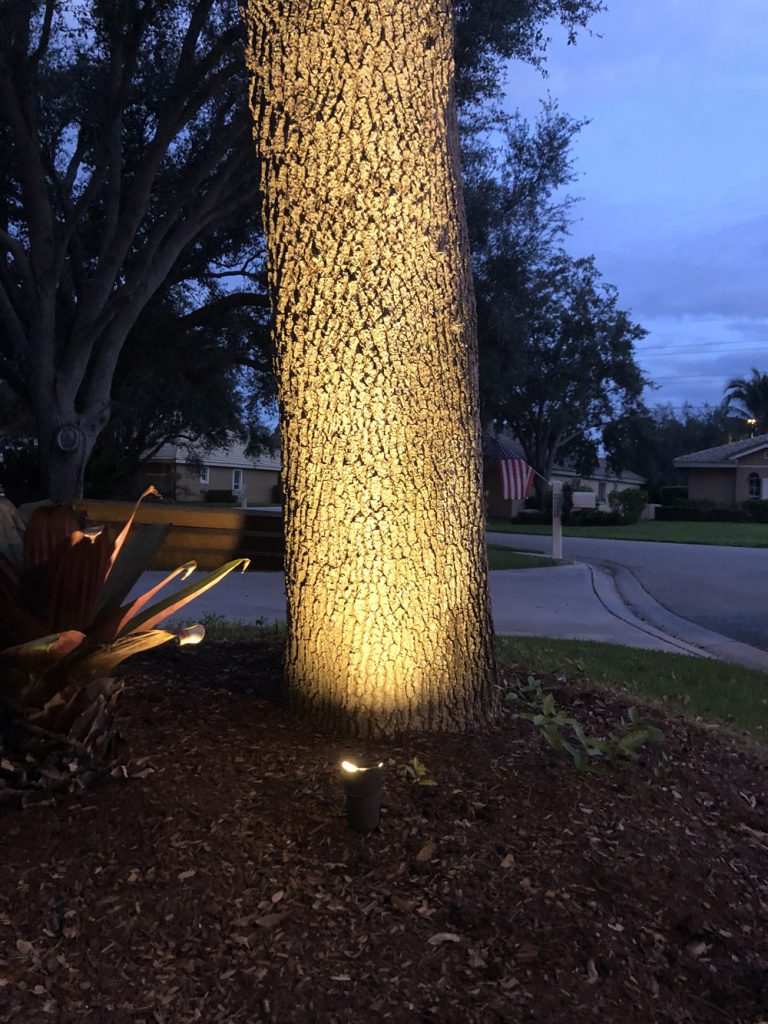
Up-lights are directional lights often installed to illuminate vertical exterior features of a home including palms, trees, and architectural columns. These light fixtures are a great way to highlight garden features and your favorite plants. Installing up-lights also contributes to adding depth to your outdoor spaces while adding ambient light for safety and security during dusk hours of the night.
Path Lights

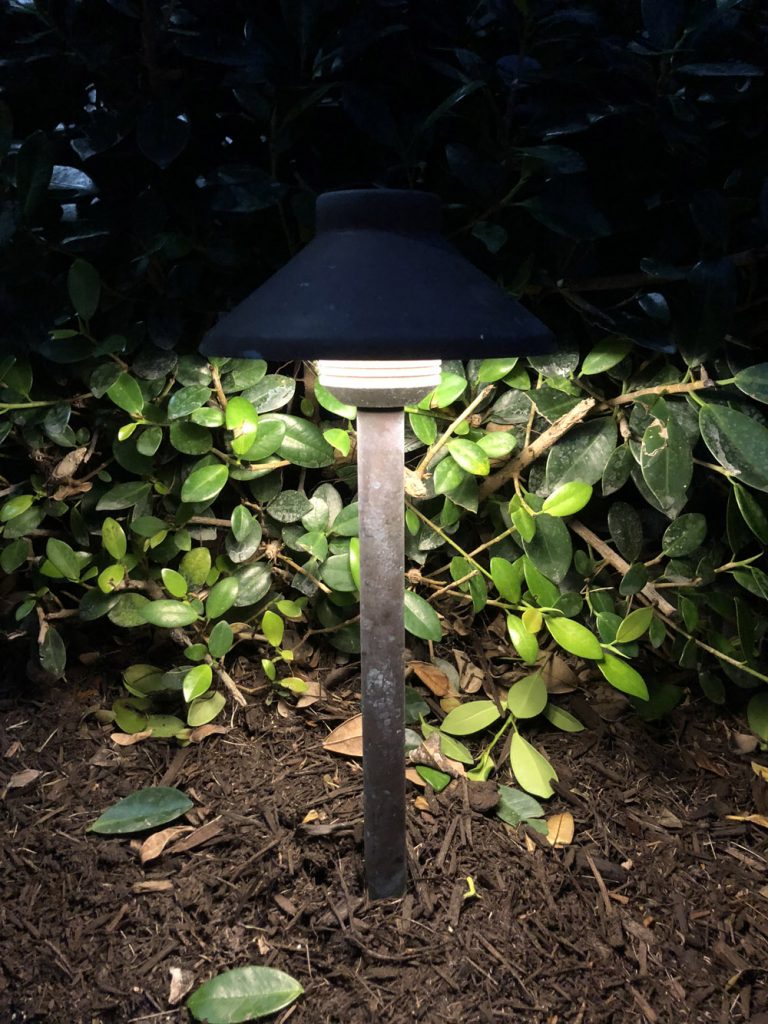
Path lights are typically used to illuminate areas of heavy foot traffic, however in recent years have been used to highlight decorative landscape beds, low profile hardscapes, and water features. Unlike many other landscape lighting features, path lights are typically installed in high traffic areas making it paramount that they are aesthetically pleasing and highly durable.
Floodlights

Floodlights are typically used to vertically illuminate home exteriors. Floodlights have a wider angle in regards to light emission than the up-lights, making them a great option to add substantial exterior lighting to your home.

Well Lights

Well Lights are a lighting fixture that’s body is installed predominantly below ground. Having its flush profile with hardscapes and turf allow it to be a great lighting option to incorporate in places where foot or machine traffic may pass over the light. Well lights low profile also gives the lighting feature the ability to illuminate starting from the base of its subject.

Deck and Step lights

Deck and step lights work to illuminate the transitional spaces in your home where the exterior and interiors collide. These lights typically highlight decks, stairs, and their ornate ballast. Having these lights installed are a must in regards to safety around these transitional areas.

Landscape lighting; Techniques & Effects

Accent/Up-lighting

This landscape lighting effect is when you take an up-lighting fixture and aim its narrow intense beam vertically to highlight focal points on the exterior of your home. This lighting effect allows you to choose individual features you would like to illuminate without large amounts of light pollution meeting other features of your home.

Grazing

Grazing is when you position a lighting fixture typically a well or flood light relatively close to a surface to highlight dramatic textures on landscapes, hardscapes or exterior walls. This is a great technique for any upgraded features of your home for example if you upgraded your front elevation from stucco to a stone facade this would be a great place for “grazing”.

Shadowing

Shadowing is a lighting technique where you position a light fixture in a relative distance from its subject so that the subjects shade cast on a vertical surface. This can be a great way to add depth to a landscape unless you are working with a detailed wall or facade in which case this technique could give the home a busy unorganized look.

Silhouetting

When you conceal lights behind and below a tree or bush, you achieve that same wondrous effect as seeing it on a ridge silhouetted against the sky at dusk.

Aquatic lighting

Water lighting is a very complicated lighting technique that when used properly can add a dramatic effect to any water feature. This technique is typically done by using an assortment of light fixtures in and around the water feature. It is important to remember that water will dilute the light’s intensity so plan on using 30%-50% more lumens.

Downlighting

Down-lighting is a lighting technique that incorporates a downward illumination over an area. To illuminate large areas it is best to use a flood light at high heights. If the goal is to illuminate ground-cover and walkways a path light fixture would work best.

Steps to lighting design

Landscape lighting design

Creating a great outdoor lighting design can be a daunting task if you go about it unprepared so we laid out a design plan to help you get started on your outdoor design.

Step 1

Creating a budget.

It is paramount that before starting to design a lighting package for your home that you create a budget for this project. During the budgeting process make sure to educate yourself on the cost of lighting fixtures, wire, transformers, LED bulbs & necessary tools. Having all these numbers together will help you execute a lighting design that you love and can afford.

Step 2

Identifying your objectives

Before your break out the pencil and paper and start walking around your home, this is a great time to identify your objectives. Typical lighting design objectives include safety, security, usability, and aesthetics.

Here are examples of each

Safety: Incorporating light fixtures anywhere there is a transition or change of elevation.

Security: Adding light fixtures to ward off potential theft

Usability (Using your home to the fullest extent): Adding light fixtures in key entertainment areas of your home to open up more exterior space and aid in overall safety.

Aesthetics: Incorporating up-lighting to highlight dramatic feature in your landscape such as water features, palms, trellis’s etc.

Step 3

Combine

The third and final step in the lighting design process is to take your budget, design objectives and perceived strength, weaknesses, opportunity and threats of your property and meld them together to come up with a design that ensures optimum use of your home and budget.

As you bring your design from the early preliminary stages of careful site analysis to a conceptual design either on paper or any CAD software it is important that you call out the quantity of material you will need to finish your project. *Note: when measuring distances needed for your wire, be sure to add an additional 10-15% to your final lengths, this will factor in lost wire due to light connections and unforeseen problems in the field.

Installing your landscape lighting system

Now that you have finished your design it’s time to install your new landscape lighting fixtures.

Step 1

Light Placement- We start the installation process of by placing all lighting fixtures as outlined on the lighting plan. When placing the lights, start out with hammering the stakes that hold the individual lights into the ground. Try to use larger stakes 4”-6” in length. Using larger stakes will make the lights sturdier and less likely to fall or break over time. Before tightening the light fixture to the stake ensure that all LED bulbs are inserted into the fixture.

Step 2

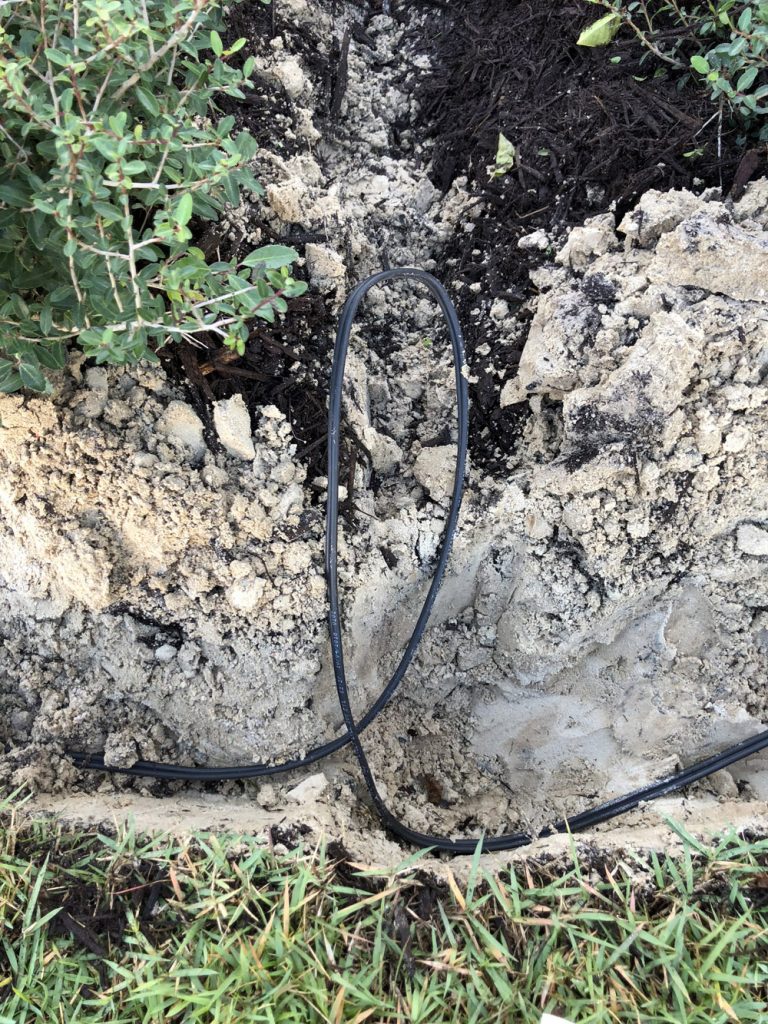
Laying out the wire- Run lighting wire starting from the transformer through to each light. Make sure to leave a loop in the wire at each individual fixture, this will give you additional wire needed to splice and connect all fixtures.
Step 3

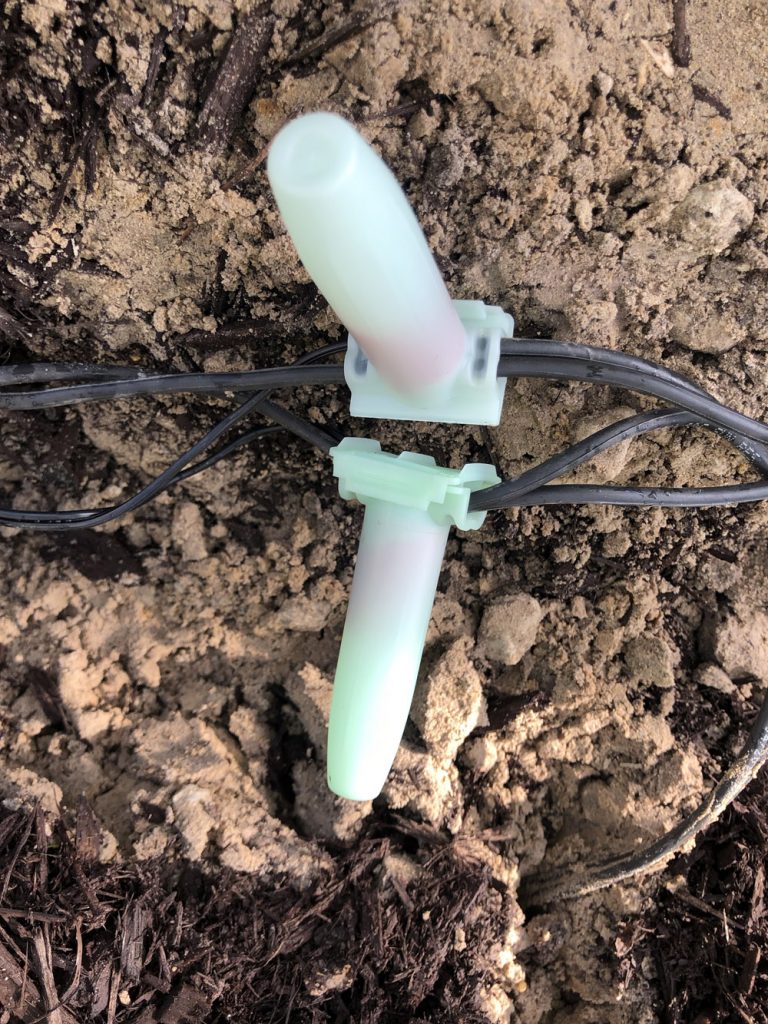
Wire Connections- At the location of each fixture cut the wire at the loop then proceed to strip roughly 1” of insulation off of the wire ends. After stripping the wire connect your lights to your wire by twisting wires together clockwise and adding a wire nut. *Note: Make sure that one of the connections is leading back to the transformer and the other is leading to the next light in the sequence. Before you bury the light connections make sure to cover wire nuts with a watertight connector. Wire connections are a critical step in the installation process, so make sure to use high-quality watertight connections.
Step 4

Mounting & connecting the transformer- Before mounting your transformer connect the low voltage landscape wire to the terminals typically found on the bottom of the transformer.  Next, you want to mount your transformer adjacent to an exterior outlet. After mounting you may plug in your transformer and walk around the home making sure all fixtures are working properly.

Step 5

Burying the wire- Once you have checked that all lights are working you can start to bury the wire. You want to bury it at least 6” into the ground to ensure that the wire is not exposed over time. A great way to do this is to insert a long square shovel into the ground with a forward and back motion. Once you have reached the desired depth lay the wire into the trough and cover with any excess dirt.

Step 6

Readjust at night- The last step in the installation process is to walk around your finished design at night making sure to adjust all fixtures to properly illuminate their subjects. Also, it is a great investment to acquire a lighting timer and sensor that will turn off your lights automatically after a certain amount of time.

Here are 7 tips to increase your home value with Landscaping!

LET’S GET STARTED!

1.    Fertilize! Putting a high-quality fertilizer on your yard a couple months before listing your home will bring back healthy color to your trees, shrubs, and grass. Fertilizer is quite inexpensive when looking at its high return on investment typically reaching over 200%!

2.    Right Tree Right Place! There is no better time than now to take an honest look at your trees and call out a professional to remove all dead or struggling trees. Next look at the strengths and weaknesses of your lot and start thinking of ways to take advantage of your strengths and minimize your weaknesses. Some great examples of this would include; adding shade trees around in your home that get heavy afternoon sun. Remove trees that are hiding decorative architectural features or taking away from breathtaking views. And adding trees that compliment your home’s design and architecture rather than subtracting from it.

3.    Curb Appeal! One of the best ways to add some buzz to your soon to be listed home is to increase your “curb appeal” with landscaping. Curb appeal is highly important when selling a home because it increases interest in prospective buyers and will increase foot traffic coming into your listing. This can easily be done by adding new shrubs, flowers, and a heavy mulching. Also, nothing says “I don’t maintain my home” like a neglected landscape.

4.    Upgrade & Automate your Irrigation System! Coming from an ex-Realtor myself, buyers hate any sort of maintenance, including manual watering. Most buyers in today’s day and age are downsizing and are trying to get away from the constant maintenance and upkeep of their homes. A great way to solve this issue is to install an automatic irrigation system that is programmed to water periodically and will even temporarily shut off the system if it senses rain. Also by upgrading and performing an irrigation tune-up, you can get your yard to consume less water while looking better.

5.    Landscape Lighting! Landscape lighting is a great way to compliment your new trees and shrubs and will have any traffic passing by your home doing a double take. This is a great way to highlight ornamental landscape features such as trellises, palms or water features.

6.    Grass, Grass, and more Grass! Often times what happens when you have been living in a home for many years your landscape begins to look overgrown. One of the best ways to simplify your landscape is removing access shrubs and plants and laying down a fresh mat of sod. This will make your landscape look more manicured as well as giving the illusion of a bigger lot.

7.    Getting rid of unwanted sound! Homes that are situated close to busy streets or highways often experience a decrease in home value due to noise pollution. A great way to combat this unpleasant noise is installing water features. Water features though not extremely loud themselves do a great job concealing unwanted noises. Other benefits of installing a water feature are their aesthetic appeal and bird attraction.

Hiring a Landscape professional.

Here are 7 tips to hiring a landscape Architect/Designer/Contractor.

1.) Licensed, bonded & insured!

First and foremost it is essential to ask your potential landscape contractors if they are licensed bonded and fully insured. The Landscape installation process often involves heavy machinery making it essential that your professional carries adequate bonds & insurance. In the rare case that an issue does arise both you and your landscape professional can rest easy knowing that any issue can be addressed and solved in a timely manner

2.) Number of Years in the business.

A great indicator of a solid and trustworthy landscape contractor is how many years they

have in the industry. Experience is typically synonymous with efficiency & proficiency. What this typically means for the homeowner is that you are hiring a professional that has a high degree of competence and skill in a particular industry equipping them with the skills to manage your project from design to completion with ease. Contractors that have passed the test of time have generally done so by constantly implementing new processes that allow them to complete projects with a high level of efficiency. As a homeowner, you always want to know that your landscape professional is using the best and most cost-effective solutions in completing your project. Hiring a landscape professional especially with local experience will go miles when you start to submit drawings to the city and board (These local authorities can often be arduous when it comes time to review your plan making it essential for you to have professional guidance.

3.) Recent projects

Looking at a company’s recent projects is a great tool to use when narrowing down your landscape contractor search. By panning through these potential contractors projects you will get a good idea of their quality of work and general architectural environments they work in. Say you are looking to build a “West Indies” style home on the water in Port Royal, Naples.

It is important to know that your potential contractor has experience designing and installing landscapes and hardscapes that compliment this architectural style as well as the knowledge to design and implement a plant itinerary that will thrive in a coastal environment.

 4.) Budget & time frame

Make sure your potential landscape contractor/designer understands your budgets and timeframes and is more than confident that they will be able to stay within your parameters.

Speaking of budgets,  It is very important even before the landscape design process begins that you as the homeowner have a budget in mind. Having a budget gives the landscape architect/designer parameters to design in. Too often in the industry landscape architects design ornate landscape plans without an accurate or any estimate on the finished products cost. An experienced and well-trained landscape architect/designer will keep these things in mind throughout the design process.

Once you have your plans completed you will be going to a landscape contractor to install your landscape as outlined on the landscape plans. It is very important that the homeowner again have a conversation regarding the cost and time frame before any construction commences.

5.) References & Reviews!

Asking a potential landscape contractor for references is a great way to acquire more information on a company. Before calling the references it is a good idea to have a list of questions ready. Some great questions to ask include; How was your overall experience with_____? Did the Project stay on budget and timeframe? Will you be calling _____ for your next landscape project?

Reviews can also be a great inside look at a company. Avoid only looking at reviews on the company’s websites and try to find reviews on third party websites such as HOUZZ.com or Google Business. This will give you a more accurate look at the company than looking at reviews on their personal website.

6.) Warranty!

When looking for a landscape contractor it is important to choose a firm that stands behind its product and design. With that said, it is important to hire a firm that carries some sort of warranty with regard to their installation and finished product. Hiring a professional that warranties their finished product is typically an accurate indicator for quality workmanship. Contractors hate doing things twice, ensuring that it is done right the first time around.

7.) Time, Trust and Personality.

Most importantly, you want to hire someone that is going to take the time to get to know you, your space and all your wants and desires. Sitting down with a good architect/designer/contractor feels a lot like sitting down with a therapist that is helping you bring all your thoughts out of the clouds and into the light. It is important that you trust and enjoy your architect/designer/contractor because they will be acting as your guide through this exciting but often lengthy process.

Downtown Naples Custom Charm

This transitional style home features a tropical landscape design that compliments its modern rustic embellishments. As you navigate your way around this home the landscape becomes increasingly more tropical as your approach the boat dock giving the homeowners the private “tropical paradise” they were hoping for while still keeping their wish of a more formal design on the front facade.

We were able to maximize the views from the pool area by strategically placing palms and landscape beds that picture framed their waterfront views. We also incorporated a simple yet elegant pathway that leads from the pool area down to the dock.

Michael F

“It was a pleasure working with Moore Landscaping throughout the design and installation of our home! Tom & Cory are true professionals in their industry!Top Notch design and unmatched customer service!”

Dennis B.

“You cannot beat the unmatched customer service that the  Moore’s provide. All of our expectations have been exceeded in regards to both design and and installation of our home’s landscape.